RAL Design System plus: the system behind the 1,825 colours
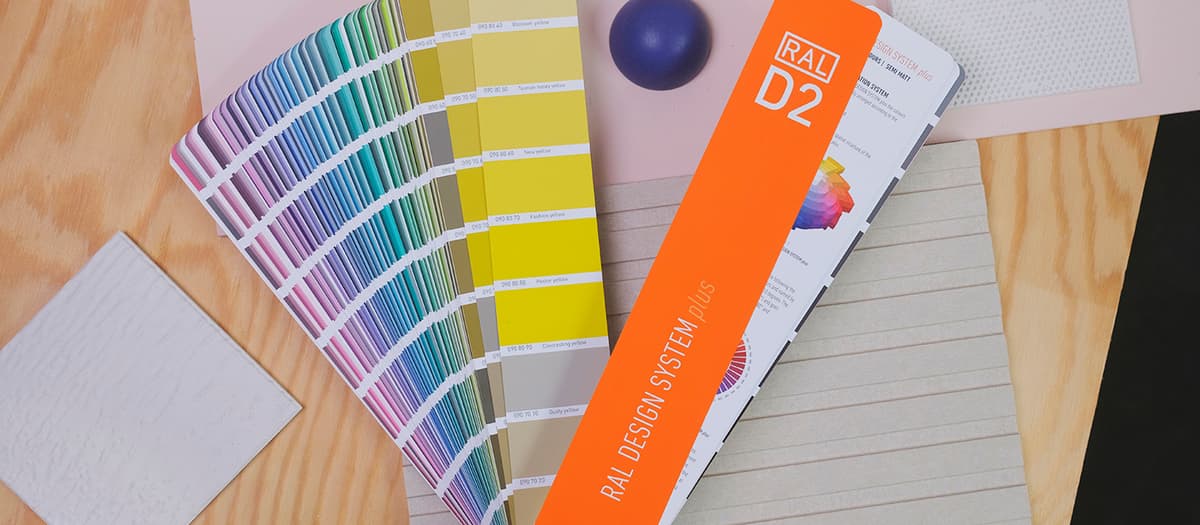
Where RAL Classic is a collection of separate, historically grown colours, RAL Design System plus is built systematically. Its 1,825 colours sit in a grid within the CIELab colour space, the space derived from how the human eye perceives colour differences.
Every code consists of three numbers: hue, lightness and chroma. RAL 210 40 30 has hue 210, lightness 40 and chroma 30. Read the code and you know immediately where the colour sits in the system — and which colours sit next to it.
That makes the system suited to work in which colours must be tuned to one another: series, gradients and harmonies can be constructed from the code instead of being found by eye. For architects, product designers and colour consultants, that is the key difference from RAL Classic.
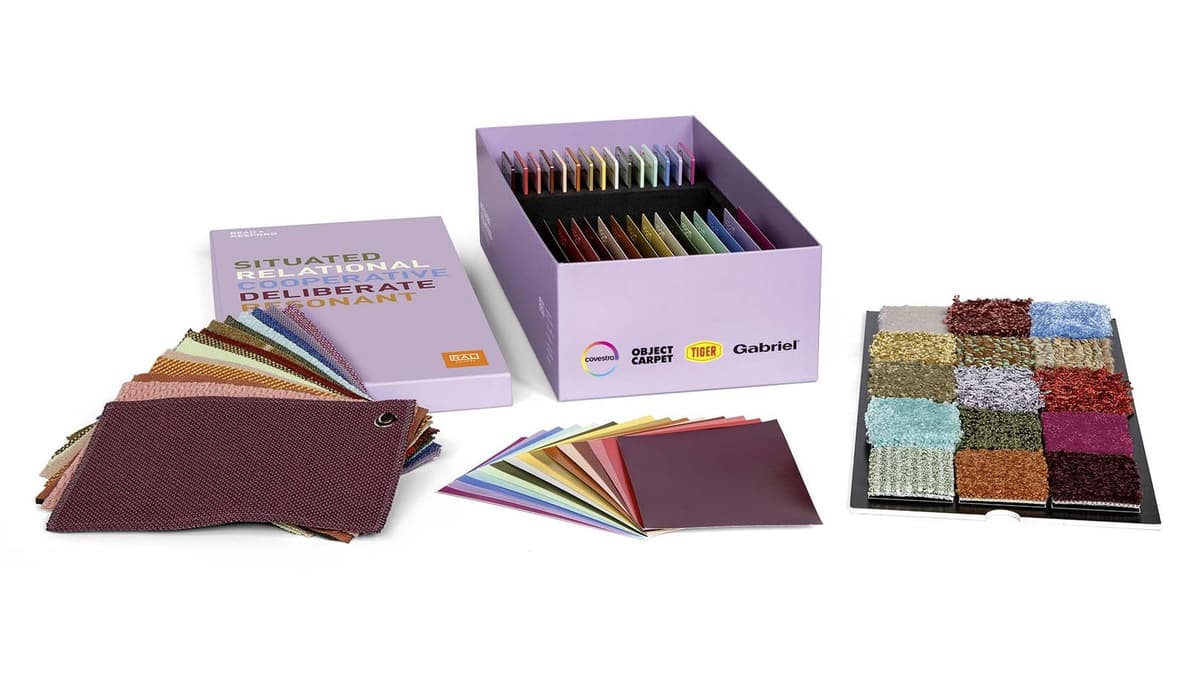
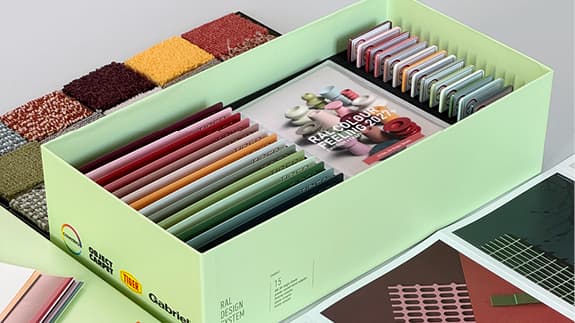
The system is used across sectors, from architecture and interiors to industrial production and packaging design. The colours are available as a fan deck (RAL D2), as a colour atlas (RAL D4), as individual colour samples in A4 and A6 format, and as colour chips.
Because the colours are defined in CIELab, every colour is measurable and reproducible. A specified RAL Design code leaves no room for interpretation, not even between suppliers or production batches.