RAL — 100 years of the global language of colour
In 1927 the first 40 common industrial colours were fixed on a colour chart and given unambiguous RAL numbers. Today the RAL standard holds more than 2,500 defined colours.
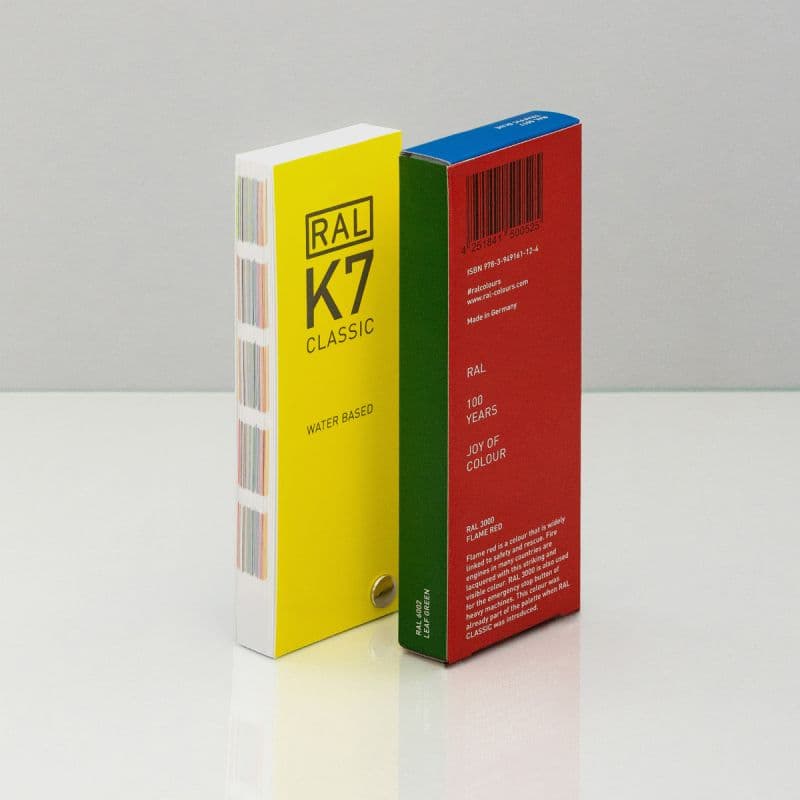 RAL Classic216 colours · since 1927Proven, timeless colours across the full spectrum, including the safety and signal colours laid down in the DIN standards.View all colours →
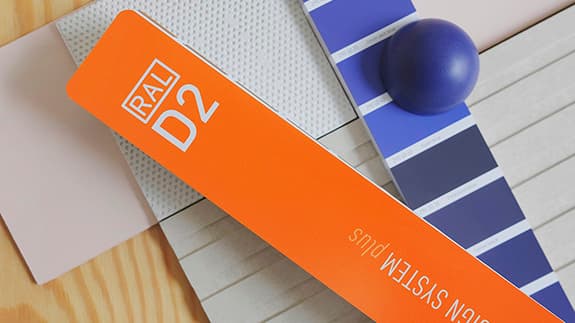
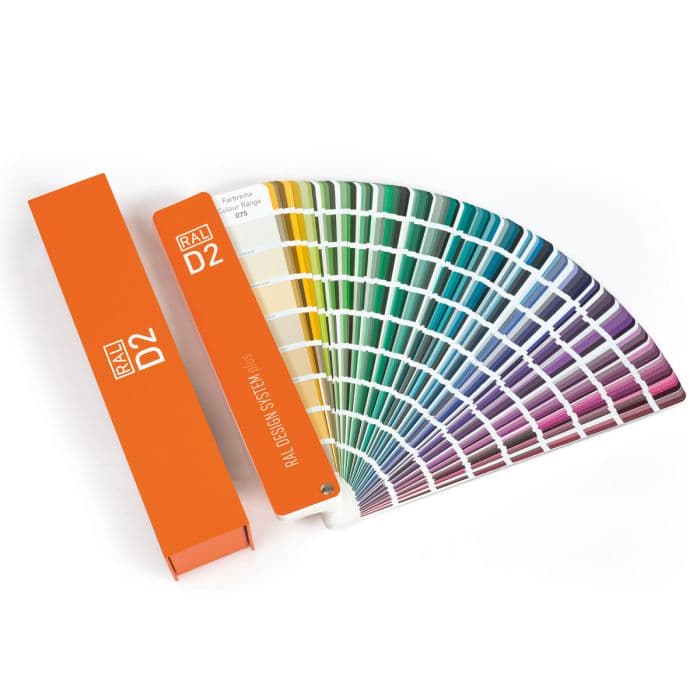 RAL Design System plus1,825 colours · since 1993Colour standards for finely tuned creative work, built on the CIELab colour space, with multilingual, associative colour names.View all colours →
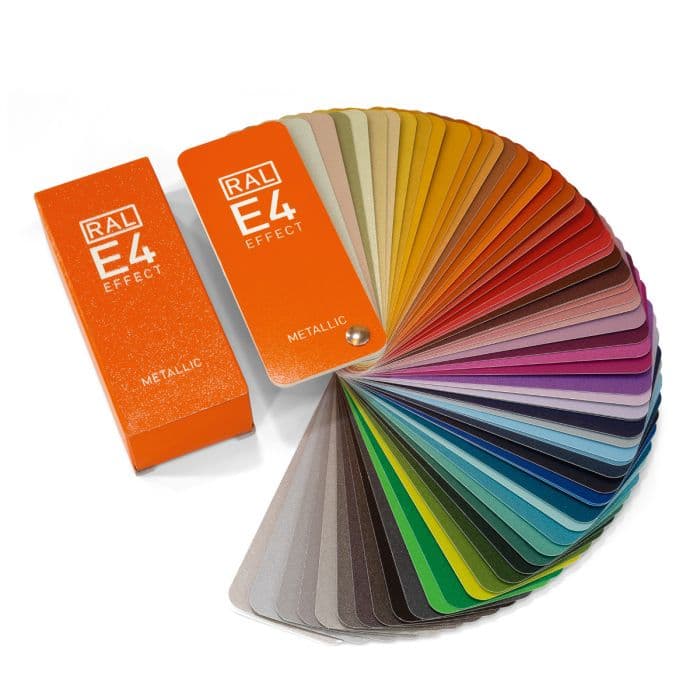 RAL Effect490 colours · since 2007420 solid and 70 metallic colours based on water-borne paint systems — free of lead, cadmium and chromates.View all colours →
Why specify RAL codes?
Good colour reference material, such as the RAL Classic fan deck and the RAL Design plus system, lets you work faster and more efficiently. That saves both time and money.
A RAL colour code leaves little room for confusion, precisely because it is unique. Specifying RAL codes reduces the risk of noise in the communication between designer, specifier and applicator.
We can also help you convert colours between systems (RAL, NCS or otherwise). An exact match rarely exists; a close approximation almost always does — and we measure how large the difference is.
Want to work it out straight away: open the converter for RAL, NCS and Pantone.
RAL in practice
From a 231,000 m² roof in Abu Dhabi to a fire engine that has to stay visible through smoke, and from trains to school corridors: eight examples of RAL colours in use, with the colour codes alongside.
View the examples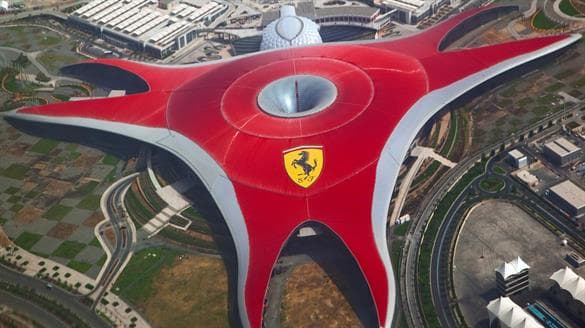
RAL Individual
RAL Individual lets you have your company details printed on colour charts from RAL Effect, RAL Classic and RAL Design — an effective promotional tool in the form of personalised RAL fan decks. Digital (up to 1,000 copies) or offset.
Request information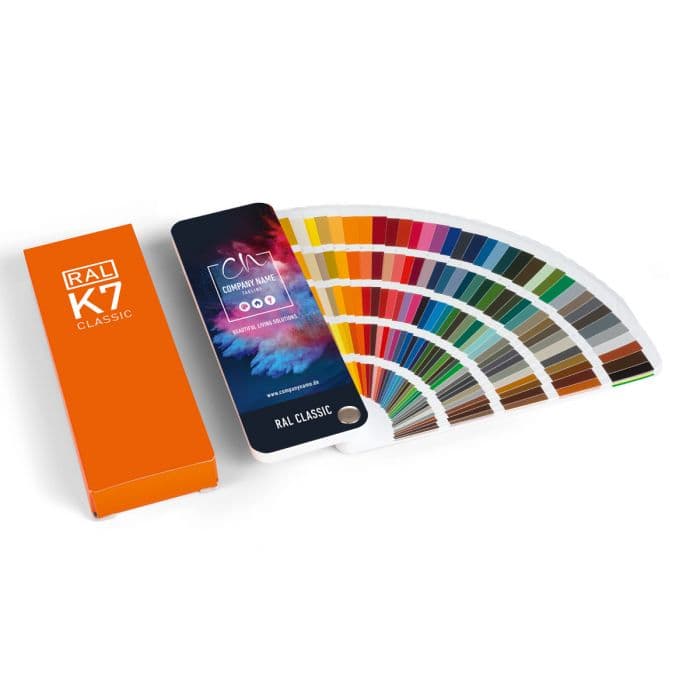
Online RAL colour training
Would you like to go deeper into the RAL system? The Nederlandse Kleurenschool offers an online RAL colour training course: learn how the collections are built up, how to read RAL colour codes, and how to specify and combine colours professionally.
To the online RAL course ↗